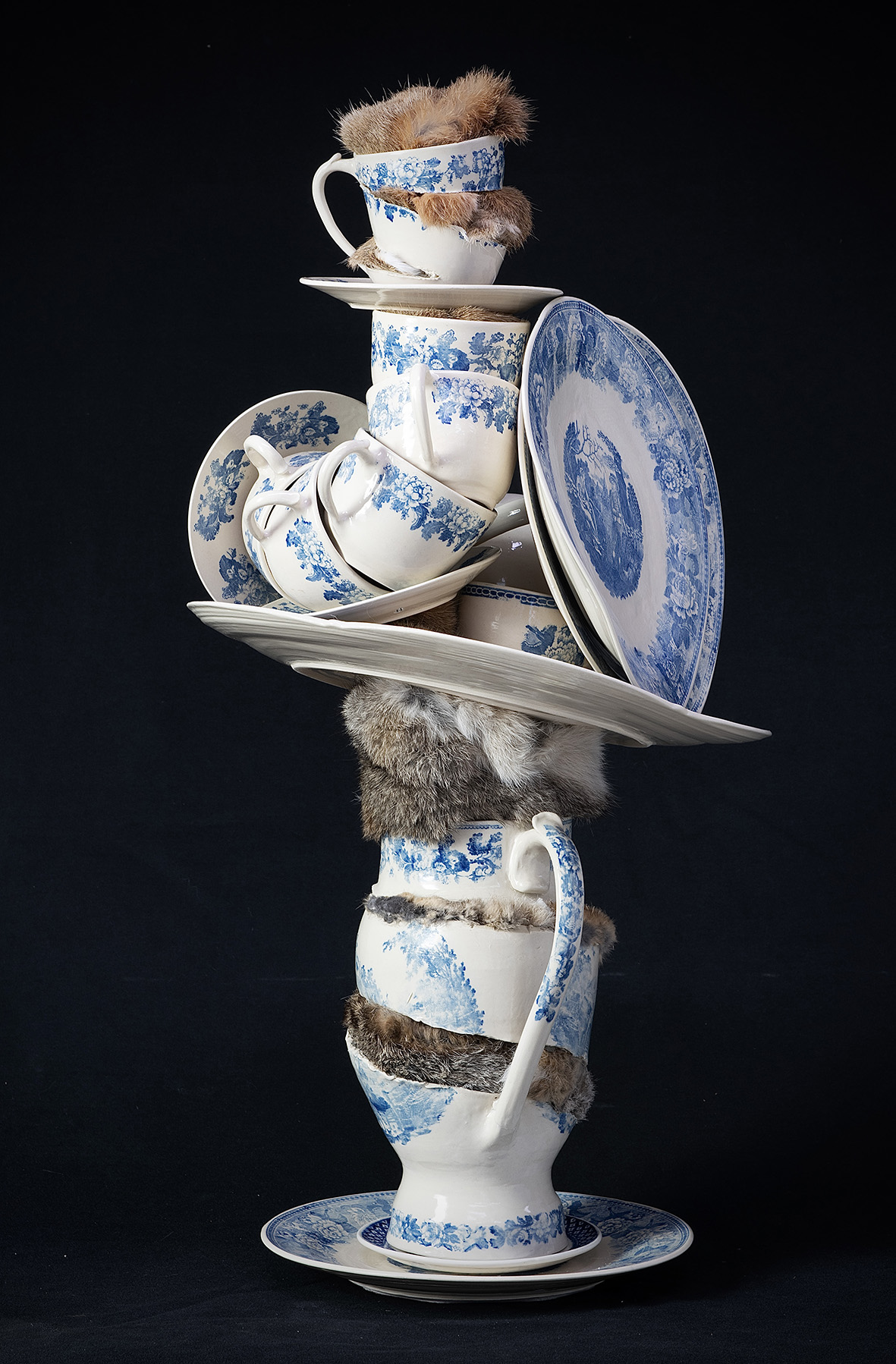
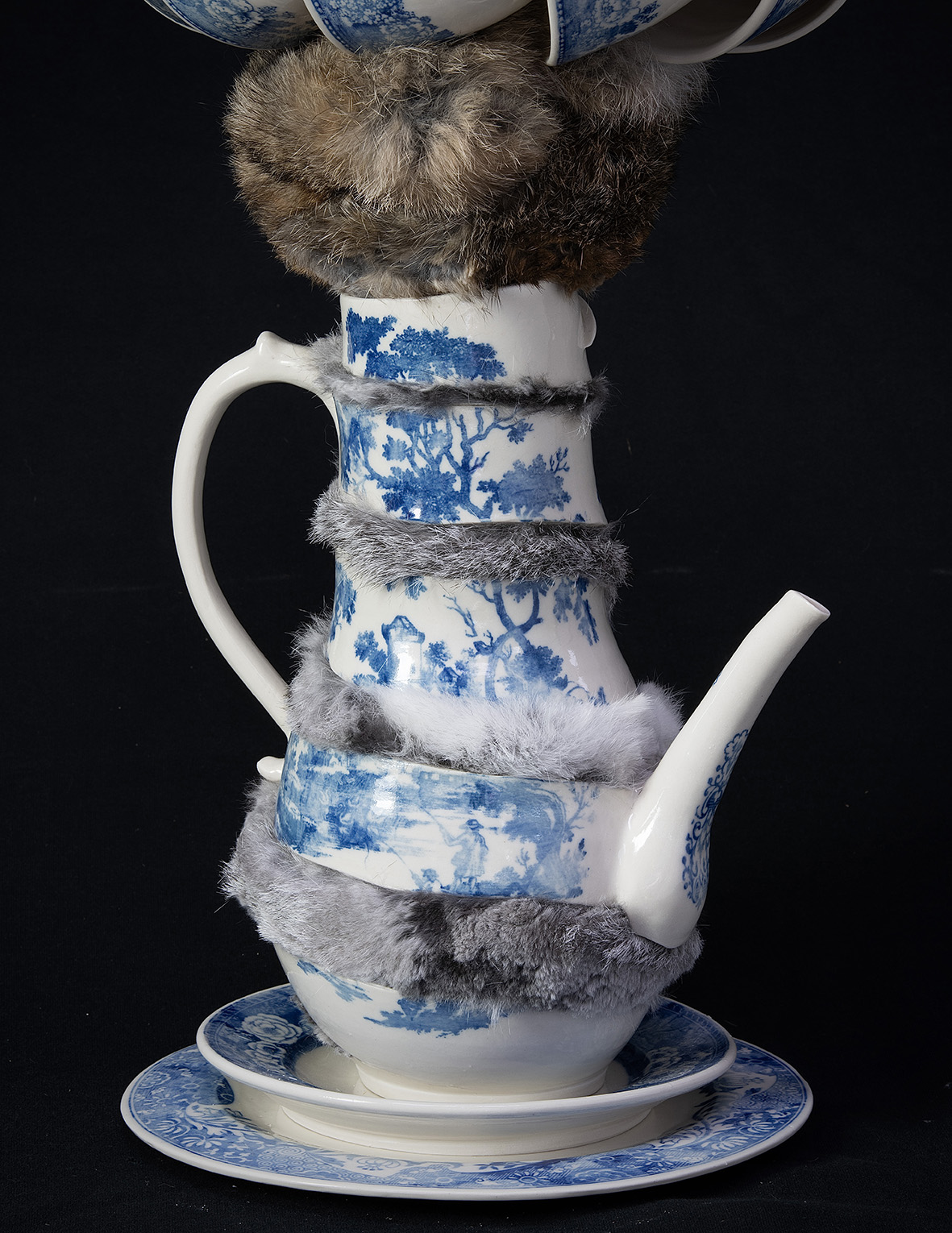
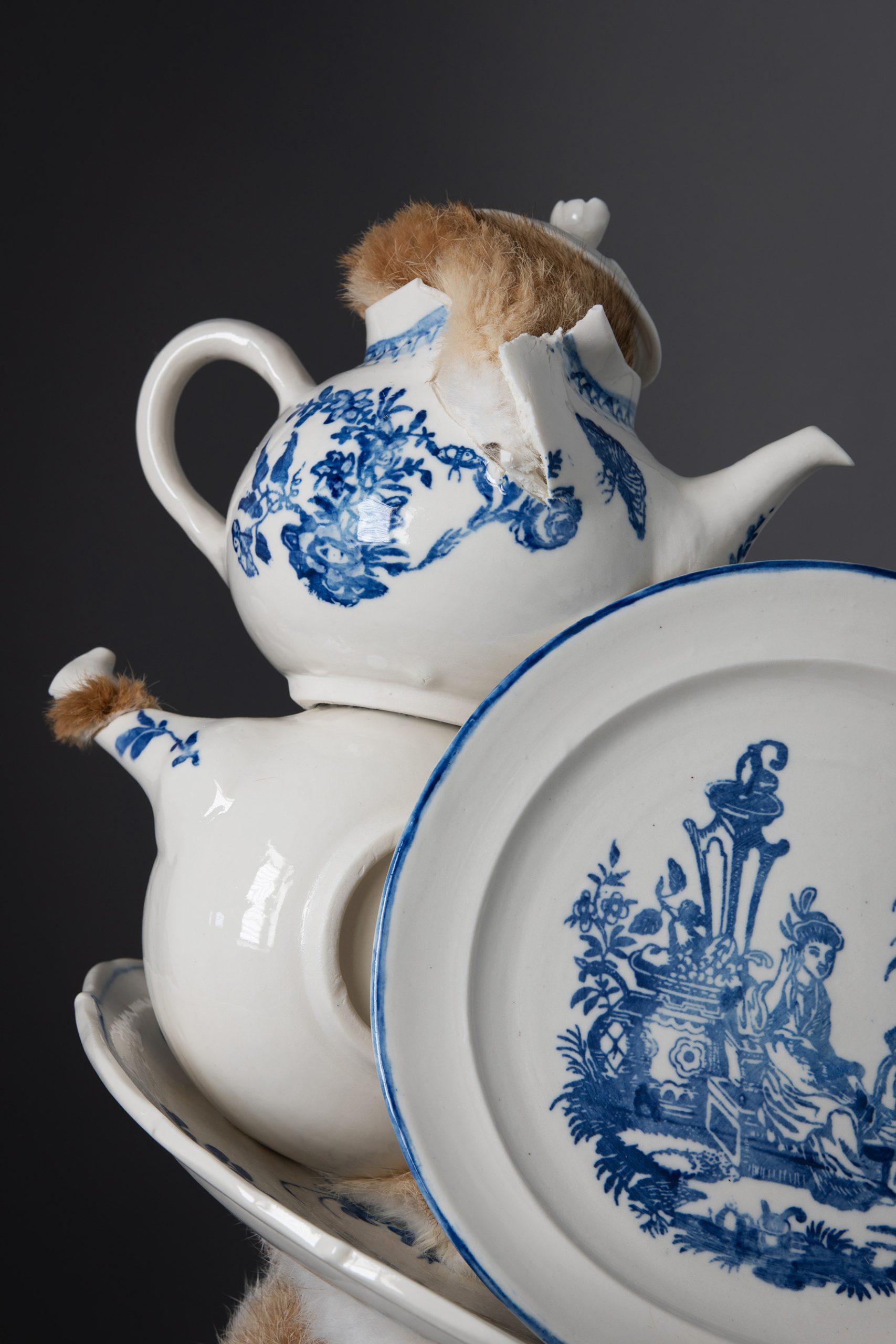
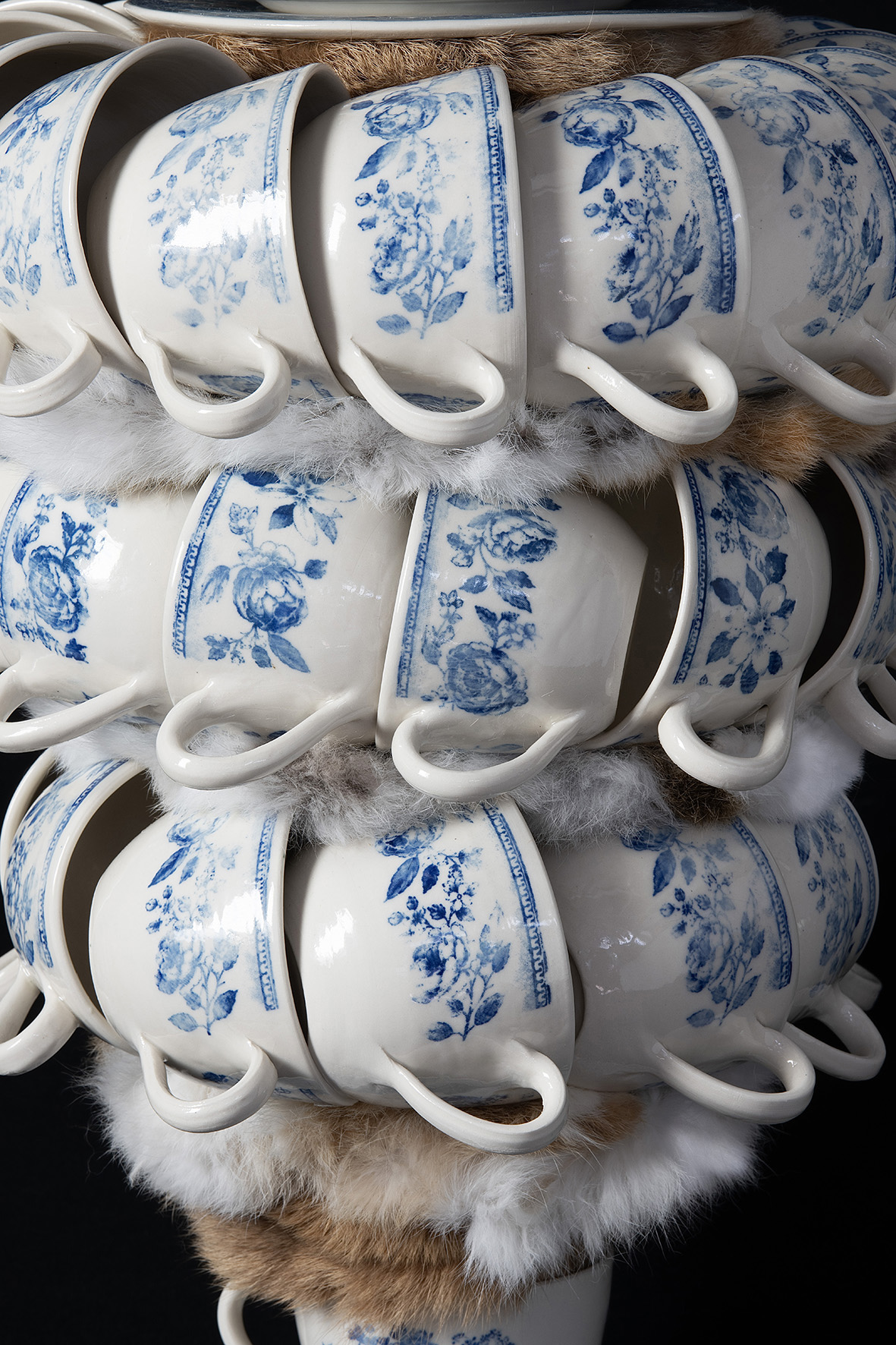
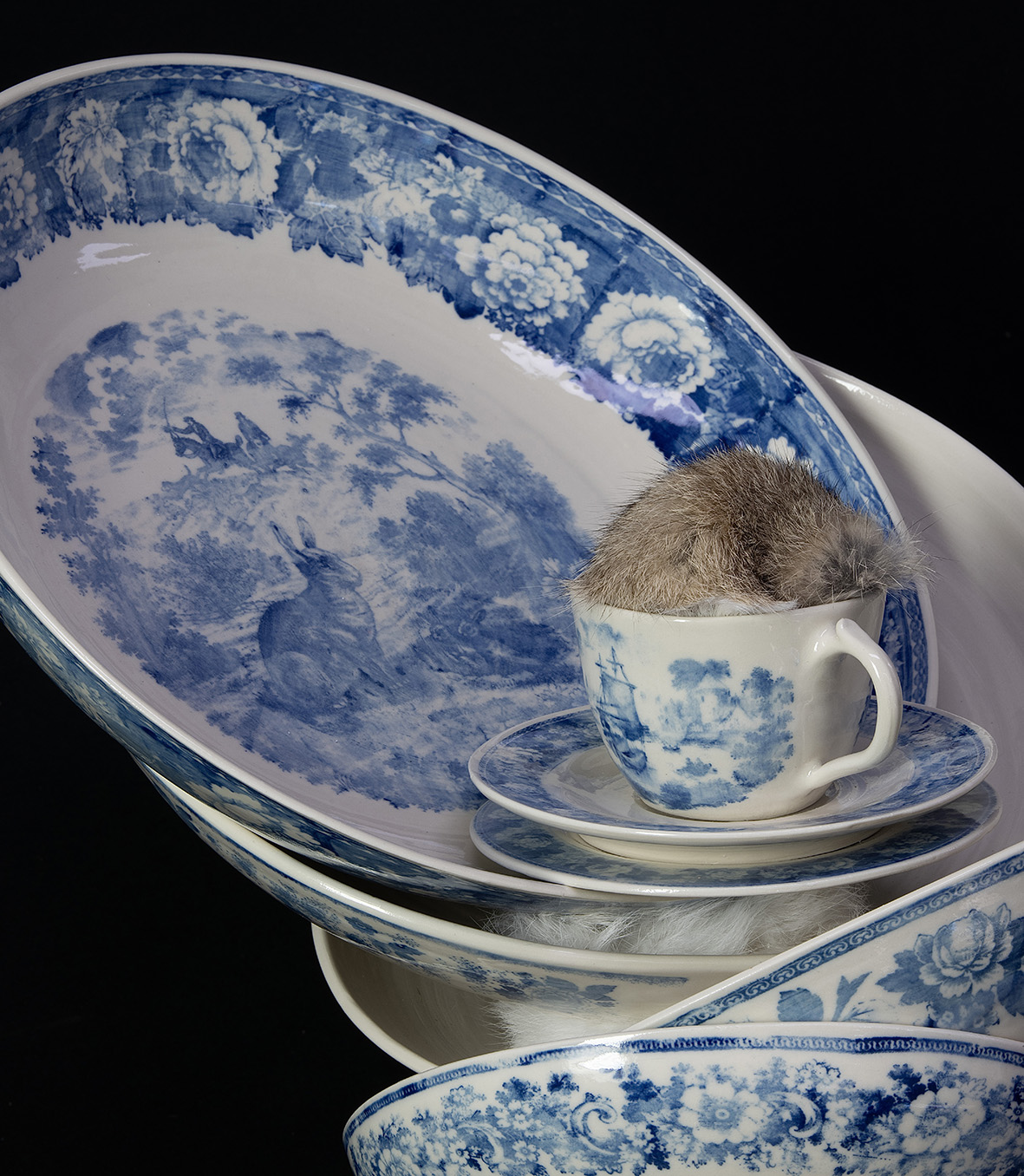
Ferals is an evolving body of ceramic sculpture that explores the environmental and cultural consequences of migration through the introduction of rabbits to Australia by early European settlers. The works begin with a specific Australian ecological history but use it to consider the broader human experience of carrying culture from one place to another.
The sculptures combine rabbit pelts with vessels that mimic 19th-century English blue-and-white transferware. The ceramics symbolise domesticity, settlement and the transplantation of British culture into Australia. Rabbits, introduced by early settlers to recreate the tradition of rabbit hunting, became one of Australia’s most destructive introduced species. In the sculptures, the rabbits erupt from the vessels, disrupting domestic order and suggesting how what people carry inevitably interacts with new surroundings. The decorative beauty of the vessels contrasts with the erupting rabbits, drawing viewers in before revealing darker histories beneath the surface.
The rabbits function simultaneously as a literal reference to a profound ecological change and a metaphor for the customs and beliefs that travel with people. They also embody a duality—devastating for the environment, yet a vital source of food and income—mirroring the complexities of migration. Like introduced species, cultures take root, adapt, hybridise and interact with the environments they enter, creating relationships that can be challenging, enriching and difficult to define.
As a Polish migrant in Australia, my position shifts the work from commenting on colonial history to reflecting on migration from the perspective of someone who has also carried culture across borders. We all carry our own “rabbits”—the customs and beliefs that influence the places we settle.